
Play Therapy in Denton County
Rated 5/5 Stars

Play is how children say what they do not yet understand or have words for.

Licensed and supervised counselors
✳︎
In-network with most major insurances
✳︎
Lower-cost options available
✳︎
Rated 5/5 Stars
✳︎
Licensed and supervised counselors ✳︎ In-network with most major insurances ✳︎ Lower-cost options available ✳︎ Rated 5/5 Stars ✳︎
Getting Started in Three Easy Steps
1 - Reach out
Fill out the contact form and tell us what your child is struggling with. Our Admin Team will call you back to get your child matched with the right Therapist.
2 - Parent intake
Your first meeting is a virtual session with parents only. It lets you talk freely about what your child is struggling with, what you have tried, and how we can help.
3 - Start the playroom
We set a recurring weekly session for your child. Every 8 to 10 sessions, we schedule a parent consult so you know how it is going and what to try at home.
What is Play Therapy?
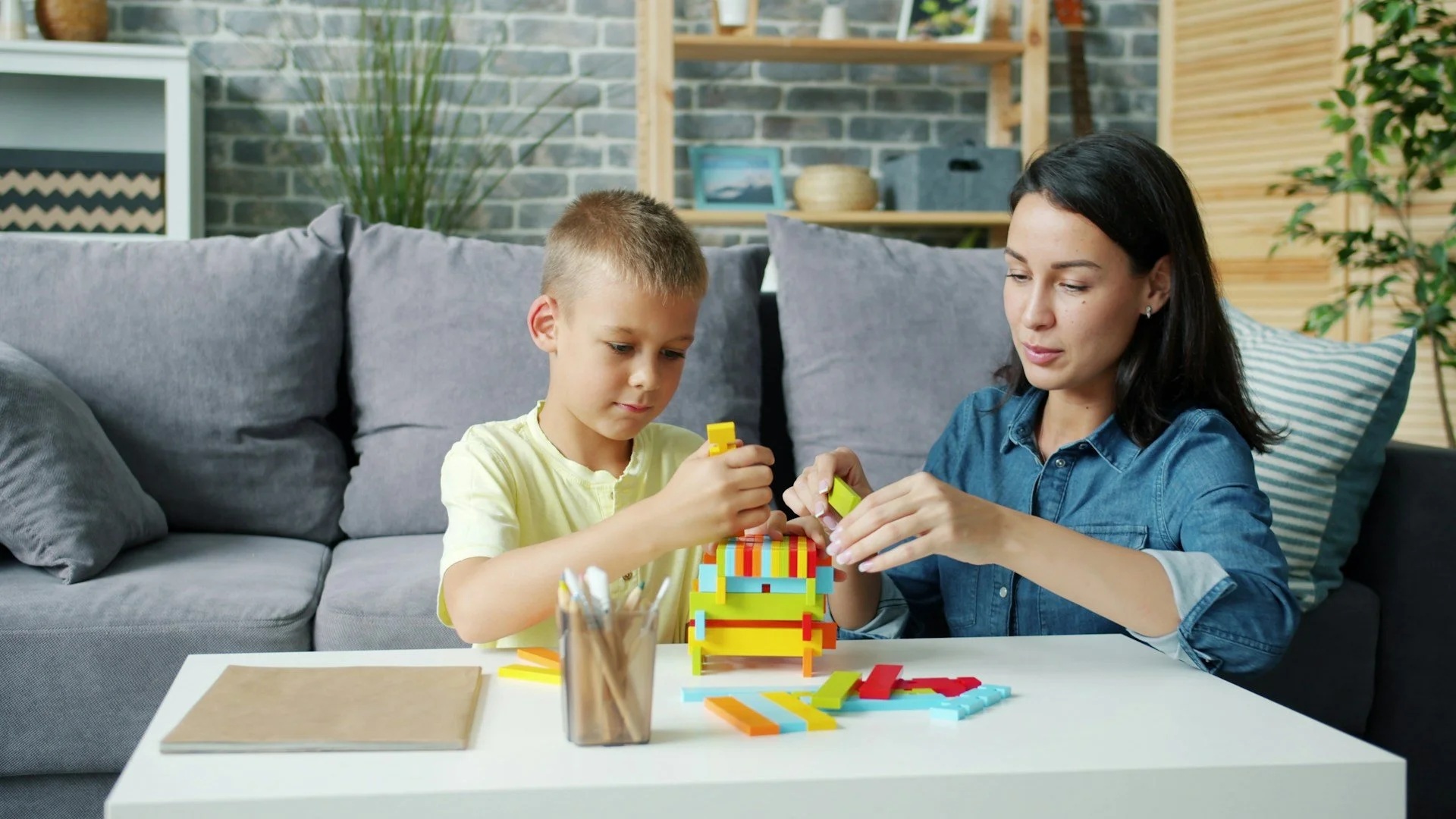
Play therapy is a structured, evidence-based approach designed primarily for children. It lets them express thoughts, memories, actions, and feelings through play, their natural form of communication, rather than through words alone.
Ask a six year old how they feel and you will get “fine.” Counselors use toys, games, art, movement, symbolic play, and creative activities to engage children so they can safely process emotions, work through internal conflicts, strengthen relationships, and build coping skills. The goal is to meet children at their actual developmental level and give them a safe place to express feelings they cannot yet put into words.
The kinds of play therapy we use:
Child-Centered Play Therapy: your child leads the play while their counselor tracks, reflects, sets limits, names emotions, and hands responsibility back to the child.
Directive Play Therapy: your child’s counselor guides specific activities aimed at helping them work on their individual goals.
Sand Tray Therapy: children build scenes in sand using miniature figures, working symbolically through things they could not approach head-on.

Parents Come To Us When
Their child’s anger seems way out of proportion to whatever set it off
Their child is constantly getting in trouble at school or daycare
ADHD symptoms are getting harder to manage
Bedtime, drop-off, or transitions have become a daily battle
A divorce, a move, a loss, or a new sibling has changed their child
Their child says “I’m stupid” or “nobody likes me”
Their child is anxious about things that never used to bother them
They have tried everything they can think of and feel out of options
Nothing on this list means you are failing. It means your kid is carrying something heavy. We are ready to help.
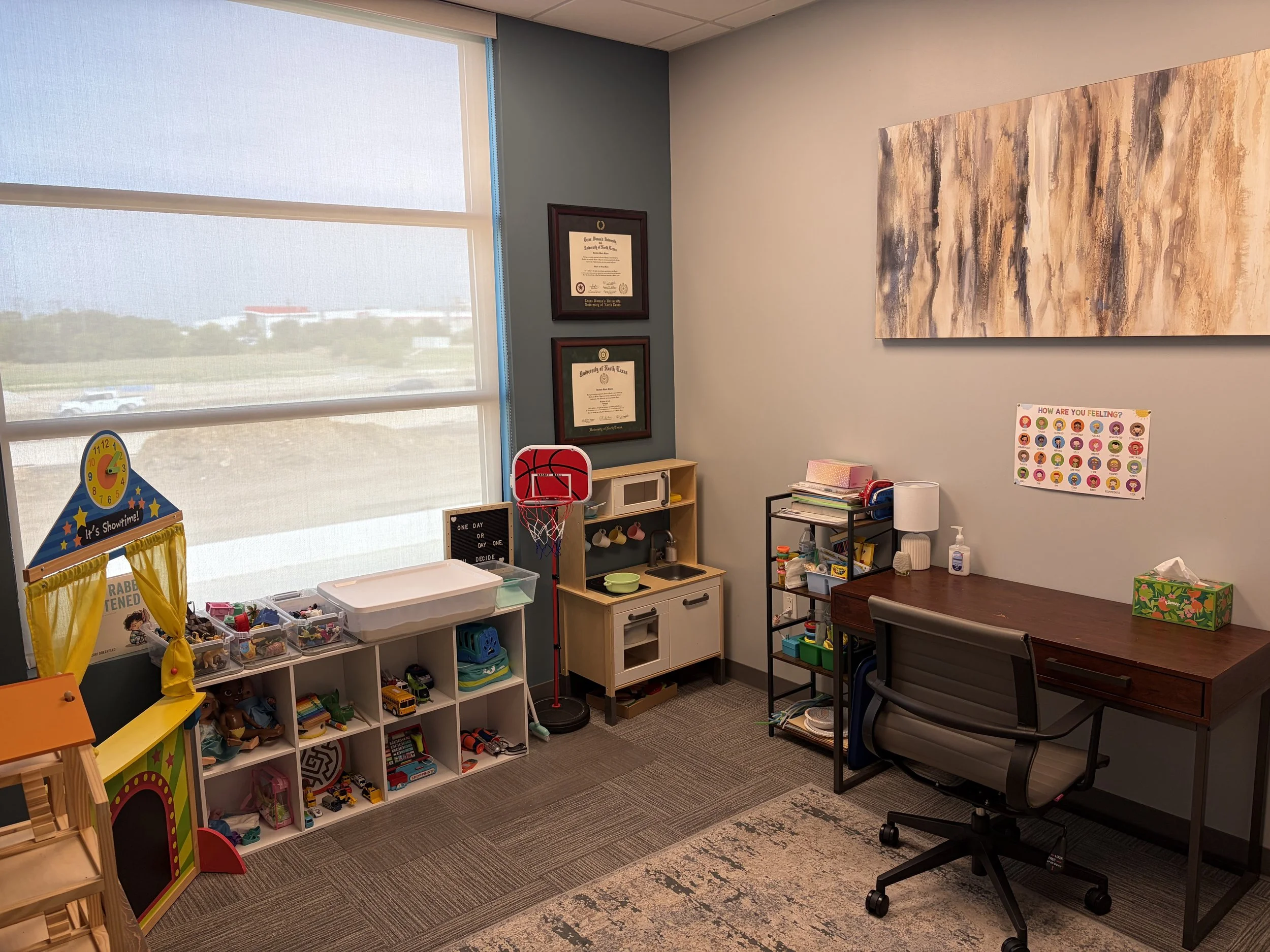
What to Expect with Play Therapy
You are not left out. Parents are kept up to date throughout the process, so the skills your child is building in the room get supported at home. Your child’s therapist will schedule parent consults with you every 8 to 10 sessions to keep you updated and get feedback on what you are seeing at home.
Play therapy can take between 10 and 15 sessions before you start to see a change in your child. It takes several sessions to build trust and a therapeutic relationship between the therapist and child, and more time still for the child to open up and be willing to work on their struggles. For this reason, we begin all play therapy relationships on a recurring weekly schedule.
About Us and What Others are Saying

Hi, I’m Ashley! I am the owner of Grateful Heart Counseling and we are here to help your family navigate through life's many challenges.
Whether it's anxiety creeping in, low self-esteem holding you back, or difficult changes happening around you, we can help you gain the skills and self confidence to overcome these obstacles.
Our counselors are trained in multiple evidence-based therapies such as Cognitive Behavioral Therapy (CBT), Accelerated Resolution Therapy (ART), Dialectical Behavioral Therapy (DBT), Eye Movement Desensitization and Reprocessing (EMDR) and for younger kids- the transformative power of Play Therapy. Together, we can start your journey towards healing and growth.
“Ashley has helped equip me with tools for parenting my son who went through a major change in his life. She listened, took time to give me materials, and helped me feel supported as the parent. I would recommend her for parents who have a child needing emotional support!”
“Grateful heart counseling is an excellent resource in the Justin area! Ashley and her team have taken a special interest in the play therapy population and know their stuff! This team does a great job equipping their clients with the tools that they need to succeed!”
“Ms. Smith has supported both myself and my kiddos through so many situations. She is enthusiastic to share ideas for solving everyday challenges as well as an expert in grief counseling, self-help, and executive functioning skills. I would give her 100/100 if that amount of stars was an option!”
Our Locations That Offer Play Therapy
-

Justin Location
-

Denton Location
Frequently Asked Questions
If you are in crisis or thinking about harming yourself, call or text 988 to reach the Suicide and Crisis Lifeline, 24 hours a day.
-
Play therapy sessions are 50 to 55 minutes. We start weekly and can step down to every other week as your child makes progress.
-
Play therapy can take between 10 and 15 sessions before you start to see a change in your child. It takes several sessions to build trust between the therapist and child, and more time still for your child to open up. This changes based on each child, but it is a good general guideline.
-
We try to get your first appointment scheduled within a week from when you call. Some of our therapists offer early morning, evening, or Saturday times. Some slots fall during the school day, and we give you a school excuse note so the time away counts as excused.
-
Your first meeting is a virtual intake with parents only, no child in the room. It lets you talk freely about what you are seeing, what you have already tried, and what you want to be different. Your child comes in for their first playroom session after that.
-
-
Your child does not have to be in crisis to benefit. If you are concerned enough to be reading this page, there is no harm in letting a professional take a look. Give us a call and we will help you decide whether play therapy is the right fit.
-
We are in-network with several major insurance panels, and our insurance specialists verify your child’s plan before you owe anything. Lower-cost sessions are available with our associate counselors.
-
No. Play therapy is in person only, at both offices, because the room is part of the treatment. We do offer virtual sessions for adults anywhere in Texas.
-
Four and up. For older kids and teens, activity therapy is usually the better fit.
-
Not always, but your therapist will make sure you have all the important information during your parent consults.
-
Yes. What looks like just playing is a trained counselor tracking, reflecting, and guiding with a clear clinical purpose.
-
We can. With the appropriate release of information from the parents, we can hold a joint session with the school and parent together to coordinate everyone’s efforts to help your child be successful. Some of our session times fall during the school day, and we provide a school excuse note so the time away is counted as excused.
-
This is very common, and not a reason to give up. We can start with the parent coming back to the playroom and helping your child warm up to the therapist and the room. Usually, once they start playing they are more excited to come back the next time.